Time Management for Marketplace Sellers: Maximize Your Profits
Learn how successful marketplace sellers manage their time to list more items, reduce wasted hours on no-shows, and scale their side hustles into full-time income.
Time Management for Marketplace Sellers: Maximize Your Profits
Time is money, especially when you're selling on Facebook Marketplace, OfferUp, or Craigslist.
The difference between casual sellers making $500/month and power sellers making $5,000/month isn't just inventory—it's how efficiently they manage their time.
The Time Management Problem
Most marketplace sellers waste time on:
- Back-and-forth messages with buyers (2-3 hours/week)
- Waiting for no-shows (4-5 hours/week)
- Relisting items after deals fall through (1-2 hours/week)
- Unorganized pickup scheduling (2-3 hours/week)
Total wasted time: 9-13 hours per week
That's a part-time job spent on inefficiency.
The 80/20 Rule for Marketplace Sellers
Focus your effort where it matters most:
20% Activities That Generate 80% of Results:
- Sourcing quality inventory (thrift stores, estate sales, clearance)
- Taking great photos (well-lit, clean backgrounds, multiple angles)
- Writing clear descriptions (measurements, condition, keywords)
- Pricing competitively (check comps, price to sell)
80% Activities That Generate 20% of Results:
- Endless negotiation with lowballers
- Custom delivery arrangements for every buyer
- Answering "is this still available?" messages individually
- Manually scheduling every pickup
The key: Automate or eliminate the low-value activities, maximize the high-value ones.
Time-Saving Systems That Work
1. Batch Your Listing Work
Don't list items one at a time. Instead:
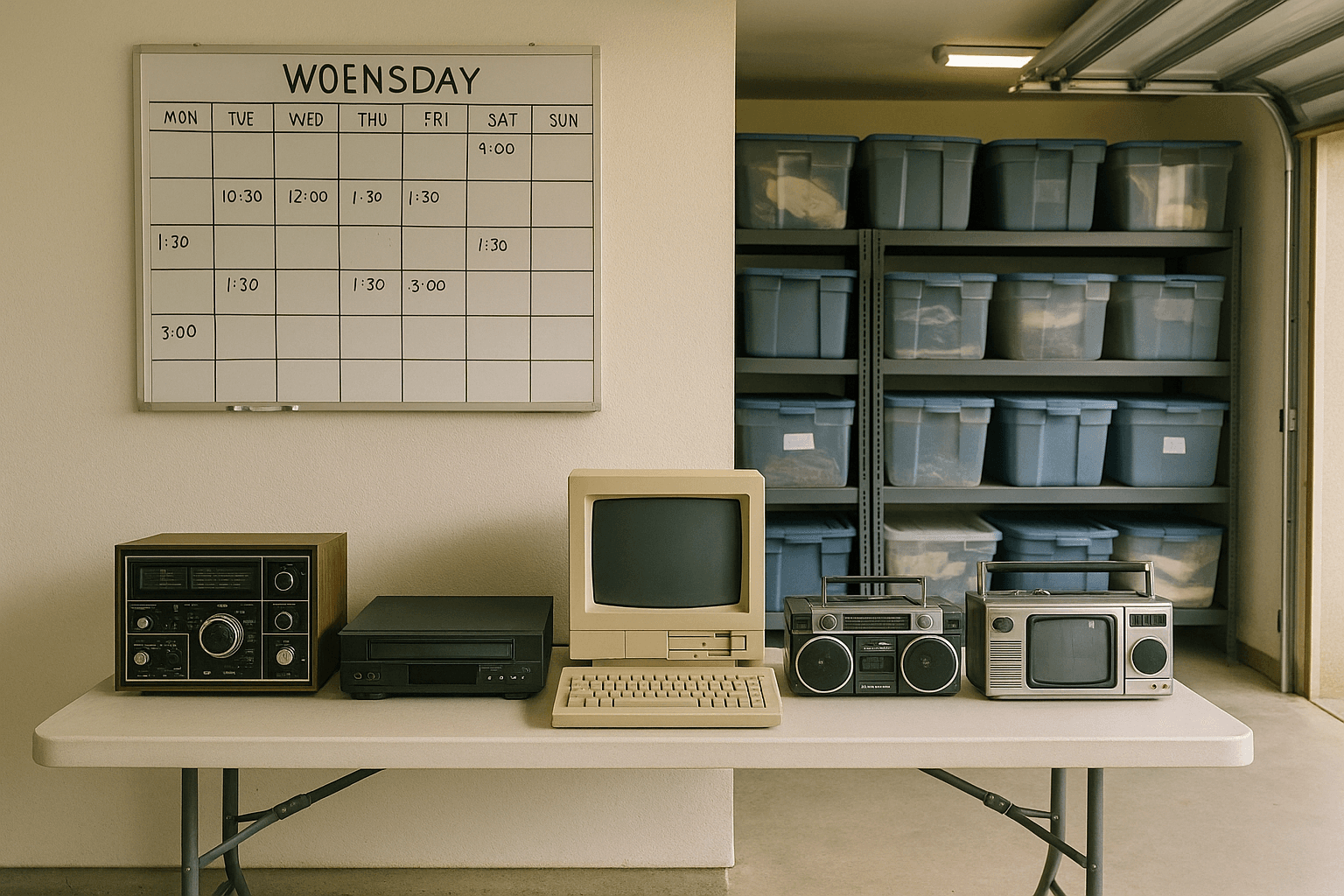
Monday Sourcing Day:
- Hit 3-5 thrift stores or estate sales
- Buy inventory in bulk
- Take all items home
Tuesday Photo Day:
- Set up photography station (white sheet, good lighting)
- Photograph all items in one session
- Use same angles/setup for consistency
Wednesday Listing Day:
- Write all descriptions
- Upload photos
- Post everything in one batch
Result: 3 focused work sessions instead of scattered daily effort.
2. Create Template Responses
Stop typing the same messages repeatedly.
Common scenarios to template:
"Is this available?"
"Yes! Here's my booking link to schedule a pickup: [link]. Choose a time that works for you and I'll see you then!"
"What's your lowest price?"
"Price is firm at $[price]. Quality item in excellent condition. If interested, book a pickup here: [link]"
"Can you deliver?"
"Pickup only at [location]. Use this link to schedule your slot: [link]"
"Can you hold it for me?"
"I can hold it for 24 hours with a $[amount] deposit. Book here: [link]"
Save these in your phone's text replacement or notes app. Copy-paste instead of retyping.
3. Set Strict Availability Windows
Don't be available whenever buyers want.
Instead of: "When works for you?"
Try: "I do pickups Tuesdays 5-7pm, Thursdays 5-7pm, and Saturdays 10am-2pm."
Benefits:
- Batch appointments into focused time blocks
- Protects your evenings and weekends
- Reduces scheduling complexity
- Makes you look professional
4. Use Location Strategy
Group pickups by location to minimize driving.
The system:
- Choose 2-3 regular meetup spots (shopping centers, police station)
- Only offer those locations
- Schedule multiple pickups in same time block
- Reduce drive time from 6 trips to 2-3 stops
Example: Saturday 10am-12pm at Target parking lot:
- 10:15am - Pickup #1
- 10:45am - Pickup #2
- 11:30am - Pickup #3
All in one trip, one location.
5. Eliminate No-Show Time Waste
This is the biggest time killer.
Problem: Waiting 30 minutes for buyers who never show
Solution: Use automated confirmations and deposits
ShowdUp handles this automatically:
- Buyers book specific slots
- Automatic reminders at 24h, 2h, 30min
- Text confirmations show who's actually coming
- Optional deposits filter out flakers
Result: 80% reduction in wasted waiting time.
Daily Schedule for High-Volume Sellers
Here's how successful sellers structure their days:
Morning (3 hours)
- 7-8am: Source new inventory (estate sales, thrift stores)
- 8-9am: Process new items (clean, photograph)
- 9-10am: List items while fresh
Afternoon (2 hours)
- 12-1pm: Respond to messages (using templates)
- 1-2pm: Prepare items for pickup, pack, organize
Evening (2 hours)
- 5-7pm: Pickup appointments (batched at one location)
Total active selling time: 7 hours/day
Days per week: 4-5
Weekly time investment: 28-35 hours
Result: $3,000-$6,000/month revenue for experienced sellers with good inventory sources.
Time Tracking Exercise
Track your time for one week:
| Activity | Hours Spent | Revenue Generated |
|---|---|---|
| Sourcing inventory | ______ | $______ |
| Photography/listing | ______ | $______ |
| Message responses | ______ | $______ |
| Waiting for pickups | ______ | $______ |
| Actual pickups | ______ | $______ |
| No-show follow-up | ______ | $______ |
Calculate your hourly rate: Total revenue ÷ Total hours = $____/hour
Now ask: How can you increase revenue per hour?
Strategies to Increase Hourly Rate
1. Source Better Inventory
Higher-value items = same work, more profit
2. Reduce Time Wasted on No-Shows
Automation and deposits reclaim 4-5 hours/week
3. Increase Prices
Test 10-15% higher on some items. You might be surprised.
4. Sell Faster
Reduce "days to sale" from 14 days to 7 days through better listings and scheduling
5. Focus on Volume
More transactions per hour through batching and systems
Technology Stack for Efficient Sellers
Must-have tools:
- ShowdUp - Automated scheduling, reminders, deposits
- Photo editing app - Poshmark, Snapseed for quick cleanup
- Pricing research - Facebook Marketplace search, eBay sold listings
- Text templates - iPhone Text Replacement or TextExpander
- Mileage tracking - Everlance, MileIQ for tax deductions
- Inventory tracking - Simple spreadsheet or Airtable
Total monthly cost: ~$50-70 Time saved: 10-15 hours/month ROI: Massive
The Scaling Roadmap
Level 1: Casual Seller ($500-$1,000/month)
- Time investment: 10-15 hours/week
- Focus: Clear out your own stuff, learn the basics
- Tools needed: Minimal, mostly manual
Level 2: Active Seller ($1,500-$3,000/month)
- Time investment: 20-25 hours/week
- Focus: Regular sourcing, consistent inventory
- Tools needed: Templates, basic automation
Level 3: Power Seller ($4,000-$7,000/month)
- Time investment: 30-40 hours/week
- Focus: High volume, systems, batching
- Tools needed: Full automation, deposits, scheduling
Level 4: Full-Time Business ($8,000+/month)
- Time investment: 40-50 hours/week
- Focus: Team delegation, multiple locations, specialty niches
- Tools needed: Everything automated, possibly staff
Common Time Wasters to Eliminate
1. Lowball Negotiators
Solution: "Price is firm" in listing. Auto-template response.
2. "What's the lowest you'll take?"
Solution: Don't respond or use template: "Price shown is my best offer."
3. Buyers Who Want Extensive Item History
Solution: Put all info in listing. "All details are in the listing description."
4. Custom Delivery Requests
Solution: "Pickup only at [location]. Book here: [link]"
5. Endless Reschedules
Solution: "One reschedule allowed, then slot goes to next buyer."
The Mindset Shift
Stop thinking like a favor-doing friend. Start thinking like a business.
Favor-doing friend:
- "Sure, I can meet you at 9pm on Sunday"
- "I'll hold it as long as you need"
- "Let me know if you change your mind"
Business owner:
- "I have slots available Tuesday 5-7pm or Saturday 10-2pm"
- "I can hold for 24 hours with a deposit"
- "First person to show with payment gets the item"
Result: Buyers respect your time and show up.
ShowdUp's Impact on Time Management
Here's what sellers report after implementing ShowdUp:
Time saved per week:
- 4 hours not waiting for no-shows
- 2 hours not doing manual scheduling back-and-forth
- 1 hour not relisting items after deals fall through
- Total: 7 hours per week = 364 hours per year
What they do with saved time:
- List 30-40% more items
- Source better inventory
- Improve photos and descriptions
- Spend time with family
- Scale up to full-time
Your Time Management Action Plan
This week:
- Track where your time actually goes
- Create 3-5 message templates
- Set strict availability windows
- Choose 2-3 regular meetup locations
This month:
- Implement batching for sourcing, photos, listings
- Set up ShowdUp for automated scheduling
- Require deposits for items over $200
- Calculate your hourly rate
This quarter:
- Increase hourly rate by 25%
- Reduce time-to-sale by 30%
- Cut no-show rate to under 10%
- Free up 5+ hours per week
The Bottom Line
Time management isn't about working harder—it's about working smarter.
Every hour you reclaim from no-shows, scattered scheduling, and message chaos is an hour you can spend:
- Sourcing better inventory
- Listing more items
- Growing your business
- Actually living your life
Start your free ShowdUp trial and reclaim your time this week.