The Real Cost of Free: Why Serious Buyers Pay Deposits
Charging even a small deposit filters out 90% of marketplace flakers. Here's the psychology behind why deposits work, how to collect them, and why serious buyers never push back.
The Real Cost of Free: Why Serious Buyers Pay Deposits
There's a counterintuitive truth about marketplace selling that took most of us too long to learn:
The easier it is to book a pickup, the less likely the buyer is to show up.
When buyers can commit to purchasing your item with zero friction—no verification, no deposit, no skin in the game—you've accidentally selected for the least committed buyer pool possible. Anyone can say yes. Only serious buyers follow through.
Deposits change the math in a way that nothing else does.
Why "Free to Commit" Attracts the Wrong Buyers
Think about how a buyer behaves when there's no cost to backing out.
They're scrolling OfferUp or Facebook Marketplace. They see your couch. "I could use a couch like that," they think. They message you. You confirm a time. They go back to scrolling.
Twenty minutes later they see two more couches. They message those sellers too. They now have three confirmed pickup times for Saturday.
Saturday morning: They check prices, distances, and vibes. They pick one and ghost the other two.
This is the normal behavior pattern for uncommitted marketplace buyers. It's not malicious. There's no social or financial consequence for doing it, so they do it.
The moment you add even a small deposit, that calculus changes completely.
Now when they see your couch and want it, there's a step before the pickup is confirmed: they have to put real money on the line. That moment of friction separates people who genuinely want your item from people who are casually interested in having a couch at some point in their future.
The Psychology of Deposits
There's a concept in behavioral economics called "loss aversion." People feel the pain of losing something roughly twice as strongly as the pleasure of gaining the same thing.
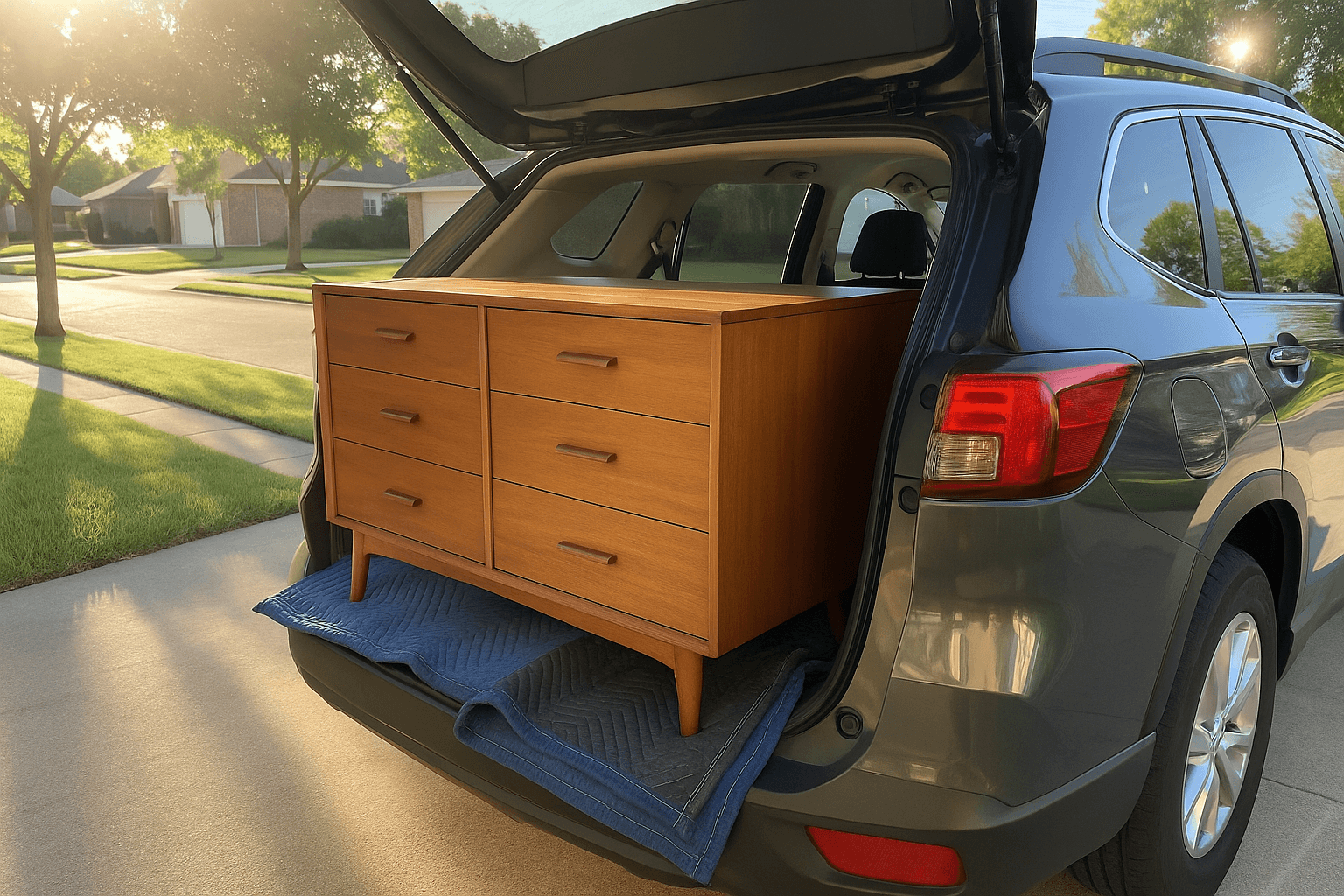
When a buyer puts down a $40 deposit on your $200 dresser, they've now created a situation where ghosting you costs them $40 in real money. That $40 deposit becomes an anchor. It transforms an abstract future commitment ("I'll go get that dresser Saturday") into a live financial obligation.
The behavioral research on this is consistent: once someone has financial skin in the game, their follow-through rate increases dramatically. This isn't about the amount. Even small deposits create meaningful behavior change.
What happens at different deposit levels:
| Deposit Amount | Relative to Item Price | No-Show Rate | |----------------|----------------------|--------------| | $0 (no deposit) | 0% | 62-68% | | $10-20 flat | Varies | ~35% | | 10% of price | 10% | ~22% | | 15-20% of price | 15-20% | ~8% |
The deposits don't need to be enormous to be effective. A $20 deposit on a $100 item cuts your no-show rate by nearly 70%. A $40 deposit on the same item gets you close to zero.
How Deposits Are Applied Toward the Purchase Price
The most important thing to understand about deposits—and the most important thing to communicate to buyers—is that the deposit is not extra money.
A buyer who pays a $30 deposit on your $150 item is not paying $180 total. They're paying $30 now and $120 at pickup. The total is still $150.
The framing that works:
"I collect a deposit to hold the item and confirm the appointment. It comes out of the total price—you're not paying extra. So the $30 you pay now means you only owe $120 at pickup instead of $150."
This is how serious buyers hear it: "I pay $30 now so the item is definitely mine and waiting for me." That's a good deal for a committed buyer. They'd rather know the item is reserved for them than show up and find it already sold.
For sellers: deposits are non-refundable. If a buyer books and doesn't show, they forfeit the deposit. This is the arrangement from the start—it's disclosed upfront, not a surprise. You keep the deposit as compensation for the time you held the item and the pickup slot you protected for them.
The Filter Effect: Who Deposits Screen Out
When you require a deposit, you don't lose good buyers. You lose specific types of bad ones.
Chronic Flakers
These are the buyers who confirm appointments with no intention of following through. They might message 10 sellers and ghost all of them when something better comes along. A deposit requirement stops them immediately—they're not going to put real money down on a transaction they're not planning to complete.
Lowballers Planning a Last-Minute Negotiation
A common tactic among low-quality buyers: confirm the pickup, show up without enough cash, and try to renegotiate on the spot. "I only have $80 on me, will you take that?" A deposit eliminates this completely. The commitment is locked in and the terms are set before they ever arrive.
Tire-Kickers
People who are curious about your item but not genuinely ready to buy. There's nothing wrong with window shopping, but you don't want to spend your Saturday driving to a meetup for a tire-kicker. Deposits route these people back to browsing without booking your time.
Scammers and Fake Accounts
Scammers specifically avoid creating financial trails. A deposit through a legitimate payment processor is the fastest way to identify someone who isn't operating in good faith. Real buyers send deposits. Scammers disappear.
What You're Left With
After deposits filter out the four categories above, your remaining buyers are:
- Genuinely committed to the purchase
- Financially capable of completing the transaction
- Respectful of your time and terms
- Far more likely to show up and complete the sale
This buyer pool is smaller. That's the point. You'd rather have 5 buyers who show up than 15 buyers with a 67% ghost rate.
Addressing Seller Fears About Deposits
Every seller who hasn't tried deposits has the same concerns. Let's work through them honestly.
"I'm afraid to scare away buyers"
You will scare away some buyers. Specifically, you'll scare away buyers who weren't going to show up. Serious buyers don't object to deposits—they understand the exchange and appreciate knowing the item is held for them.
In our experience watching thousands of sellers implement deposits, the conversion rate on buyers who actually pay the deposit is close to 95%. You lose the flakers and keep almost everyone else.
"What if no one will pay my deposit?"
If buyers genuinely won't pay a deposit, it usually means one of two things: your price is too high for the deposit amount to feel reasonable, or you're operating in a market where buyers aren't accustomed to deposits and need more education.
The solution to the first problem is adjusting your pricing or your deposit percentage. The solution to the second is explaining the deposit clearly in your listing: "Booking requires a small deposit applied toward the purchase price. Confirms your appointment and reserves the item."
Most resistance evaporates when buyers understand the deposit isn't extra money.
"What if I have to refund someone?"
Deposits are non-refundable. This is the arrangement from the start, and it's disclosed upfront. If a buyer cancels after paying a deposit, they forfeit it—that's the compensation to you for the time you held the item and turned away other buyers.
Sellers may choose to issue discretionary refunds in exceptional circumstances, but that's not the default, and it shouldn't be. The non-refundable nature of the deposit is precisely what creates the commitment effect.
"This seems too complicated to set up"
Manually collecting deposits via PayPal or Venmo is doable but creates friction for both you and the buyer. Tools like ShowdUp handle the deposit collection, the scheduling, and the automated reminders as a single integrated system. A buyer clicks your booking link, picks a time, pays the deposit, and the pickup is confirmed—without you doing anything manually.
When to Require Deposits vs. When to Skip Them
Deposits make sense for most transactions, but there are cases where they add friction without proportional benefit.
Always use deposits for:
- Items priced at $75 or more
- Furniture (historically high no-show category)
- Anything you're holding for more than 24 hours
- Electronics, appliances, or anything with setup complexity
- Buyers who want you to travel to meet them
Consider skipping for:
- Items under $30-40 where the deposit logistics exceed the value at risk
- Instant cash-and-carry pickups with minimal scheduling involved
- Established buyers you've worked with before
The threshold most sellers land on is $75-100. Below that, deposits can feel disproportionate. Above it, the time and holding cost make a deposit well worth the minor friction.
How to Collect Deposits Without the Awkwardness
The awkward part of deposits isn't the deposit itself—it's not knowing how to bring it up. Here are the scripts that work.
In your listing: "Pickup by appointment. Small deposit required to reserve your slot—applied toward purchase price at pickup."
When a buyer confirms interest: "Great! I use a booking system to keep things organized and eliminate no-shows. Here's my link to pick a time and confirm your spot with a deposit: [link]. The deposit comes out of the total price, so no extra cost on your end."
If a buyer asks about the deposit: "It's to confirm you're serious and reserve the item for you—fair to both of us. It applies toward the total, so you're not paying extra. Flakers don't put money down, which is the whole point."
If a buyer pushes back: "I completely understand if it's not for you—no hard feelings. I've found it's the best way to make sure I'm only meeting with buyers who are actually ready to complete the purchase. Good luck finding what you're looking for."
That last response does two things: it lets resistant buyers self-select out gracefully, and it signals to serious buyers that you run a tight operation. Neither is a bad outcome.
What Happens to Your Numbers After Implementing Deposits
These are real patterns we see across sellers who switch from no-deposit to deposit-required:
Volume change: Total inquiries stay similar or drop slightly (fewer casual browsers). Committed buyers are unaffected.
No-show rate: Drops from 60-70% to typically under 10%.
Completed sales rate: Goes up significantly because fewer deals fall apart after commitment.
Seller time reclaimed: 4-6 hours per week for active sellers. More for high-volume resellers.
Revenue per hour: Increases substantially because you're spending less time waiting in parking lots and more time completing transactions.
The deposit doesn't just filter flakers. It transforms the entire character of your buyer interactions. When every buyer you meet has already committed real money, the conversations are different. The pickups are faster. The completion rate is higher.
Deposits and ShowdUp
ShowdUp handles deposit collection as part of the booking flow. When you set up a booking link with a deposit requirement, buyers pay via PayPal when they select their time slot. The deposit is applied toward the purchase price, collected before the pickup, and tracked in your ShowdUp dashboard.
You don't have to manually request money, follow up on whether they paid, or manage the paperwork. The deposit is built into the confirmation process.
Combined with automatic SMS reminders—24 hours before, 2 hours before, 30 minutes before—the deposit becomes part of a complete system that makes no-shows nearly impossible rather than frustratingly common.
Start your free 15-day trial and see what your business looks like when buyers actually show up.
Related reading: Why OfferUp specifically has a flaking problem and what six months of no-show data actually shows.